Our story

Inclusion starts with listening…

…but only if pupils can tell us how they are really feeling and experiencing their school journey. Authentic pupil voice is at the heart of the Send Signals idea, which came to Nicky one weekend whilst walking our dog, Ziggy.

We're Nicky and Tim, a husband and wife team running a small business to make a difference in an area we both care deeply about.

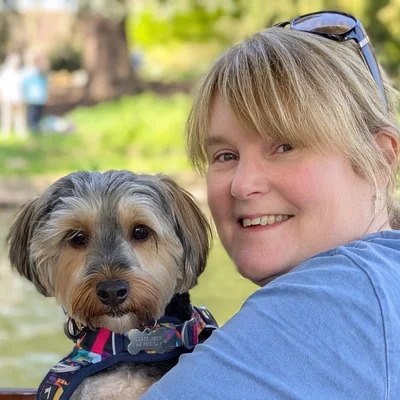
Nicky Youngman smiling, with Ziggy the dog, on a day trip to Stratford-upon-Avon

Nicola (Nicky) Youngman

Co-founder & Education Lead

Assistant Headteacher and SENDCo, leading SEND and Pupil Premium.

Meet Nicky.

Nicola (Nicky) Youngman is an Assistant Headteacher and SENDCo at a secondary school in the West Midlands, with 30 years' experience in education. Originally trained as a Design and Technology teacher after graduating from Brunel University, she has built her career in secondary education through both teaching and pastoral leadership, including roles as Head of Year and SENDCo.

Her passion for inclusion is both professional and personal. As a parent of twin boys with SEND, now adults, her lived experience has shaped her commitment to ensuring that school systems truly meet the needs of all learners. She is particularly driven by building strong relationships with pupils and supporting them to navigate school successfully, recognising both the rewards and the challenges this brings.

Nicky now leads on SEND and Pupil Premium as part of the senior leadership team. She sees her role as a privilege, overseeing provision for vulnerable pupils and working to design systems that remove barriers, strengthen belonging and enable every young person to succeed. She describes being a SENDCo as both the most challenging and the most rewarding role she has held.

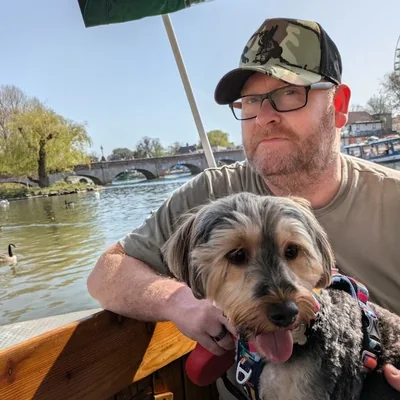
Tim Youngman on a boat on the river at Stratford-upon-Avon, with Ziggy the dog

Tim Youngman

Co-founder & Product Lead

Built every part of Send Signals, from the fob to the apps.

Meet Tim.

Tim Youngman has worked in technology for 35 years, a career that began in the armed forces with the Royal Signals. Today he also works part time as a School Staff Instructor with a school's Combined Cadet Force, so he sees school life up close every week.

Tim has built every part of Send Signals himself, from the pocket-sized fob to the pupil app and the staff hub. Building things is his passion, and Send Signals brings together everything he has learned.

For Tim, it's personal. He sees a system that too often misses the children who keep their worries to themselves, because he was one of them. As a child he wouldn't tell anyone when something was wrong, and he believes a simple, private way to be heard would have helped him become a more confident person. Away from his projects, his life is his family and their dog, Ziggy.

Why we built Send Signals.

The idea for Send Signals came to me on a dog walk one weekend, after a particularly tough week at work.

As a SENDCo, I could see many of the pupils we work with, especially neurodivergent pupils, quietly muddling through the school day as best they could, working so much harder than their peers just to manage it. They showed incredible resilience and determination, but often they were masking, and finding every day a challenge.

I kept thinking: if we knew what they were experiencing and feeling in the moment, we could do so much more. We could be proactive and advocate for them, make a simple adjustment, or just listen.

Often it was parents who told us how the day had really gone. Their child would get home, decompress, and only then share what had been hard. By the time we heard, the moment had passed. Sometimes it was something small that had played on their mind all day, but they didn't want to make a fuss, so they kept going.

These pupils are incredible. They deserve to be heard on their own terms, and in time for it to make a difference. Inclusion does start with listening, but it has to be authentic, timely pupil voice.

We want to be advocates for the pupils in our care, building trust and positive relationships. Send Signals is where that starts: one tap, the same screen every time, and someone trusted on the other end who sees it. Someone who can help, build a picture, spot the pattern, and make the changes that make school a little easier.

Nicky Youngman Co-founder and SENDCo

What we won't compromise on

Our rules for every screen.

Identical every time
The pupil's screen never changes layout. Predictability is a feature.
Never a blank box
Pupils tap. They never have to type or compose anything.
Up to 3 taps, under 10 seconds
If a check-in takes longer than that, it's too long.
Private at the core
One pupil can never see another's data. The database enforces it.
Nothing hidden from the pupil
When a pupil's check-ins raise an alert, they're told too, with a kind message. Trust is the whole point.
UK data, always
Pupil data is stored and processed in the UK.

FAQ

Questions schools ask us.

For pupils

Do pupils need a phone?

No. The fob was made for schools where phones aren't allowed, or where pupils don't have one. Where phones, tablets or laptops are allowed, pupils can use our app or any web browser instead. It's the same account either way.

Who can see a pupil's check-ins?

The pupil, and staff at their own school with the right access level. Pupils can never see each other's data. That's enforced by the database itself, not just by the app.

Is Send Signals a safeguarding tool?

No. Send Signals is not an emergency service. It helps staff notice pupils who may need support sooner, and it sits alongside your safeguarding procedures. It never replaces them. Any concern about a child's safety must go through your school's usual route.

Can staff message pupils through it?

No. Pupils check in, and can follow any check-in with a preset signal. Staff follow up in person. We think a conversation with a trusted adult beats a message on a screen.

For your school

Which MIS do you work with?

We connect through Wonde, which links to the major UK MIS, including SIMS, Arbor and Bromcom. We only read from your MIS; we never write back. Without Wonde, you can upload a file exported from your MIS instead.

Where is our data stored?

In the UK. Our database and the servers that run our code are both in London. The full list of companies that process data for us is in our privacy policy.

What if a fob is lost or doesn't have Wi-Fi?

Without Wi-Fi, a fob saves each answer and sends it when it next connects. The pupil's name is never stored on a fob. If one is lost, staff press Report lost: the next time it connects it stops working, clears the pupil's information and asks whoever finds it to return it to your school. More about lost fobs.

Will fobs work on our school Wi-Fi?

Almost certainly. Fobs use 2.4 GHz Wi-Fi and support password networks, open networks and WPA2-Enterprise (PEAP). See For IT & data for exactly what your network needs to allow.

Cost and trial

Is the fob extra?

Yes. The fob is optional and charged separately from the software, for schools that want it. Founding schools get fobs on loan, free, for their pilot term.

What does it cost?

Founding schools pay nothing for the software during their pilot term, and we lend the fobs. After the pilot, founding schools keep a reduced founder price. We'll talk you through pricing on a call.

Can I try it first?

Yes. The live demo (opens in a new tab) gives you your own private copy of a demo school for two hours, from both the pupil's side and the staff side.

Still have a question?

We're a small team and we read every email ourselves.